
Specialist in Accessible Walk-in Showers, Adapted Bathrooms, and Mobility Solutions.
Email: sales@safebathingsolutions.co.uk Tel: 0151 601 8981
Specialist in Accessible Walk-in Showers, Adapted Bathrooms, and Mobility Solutions.
Email: sales@safebathingsolutions.co.uk Tel: 0151 601 8981
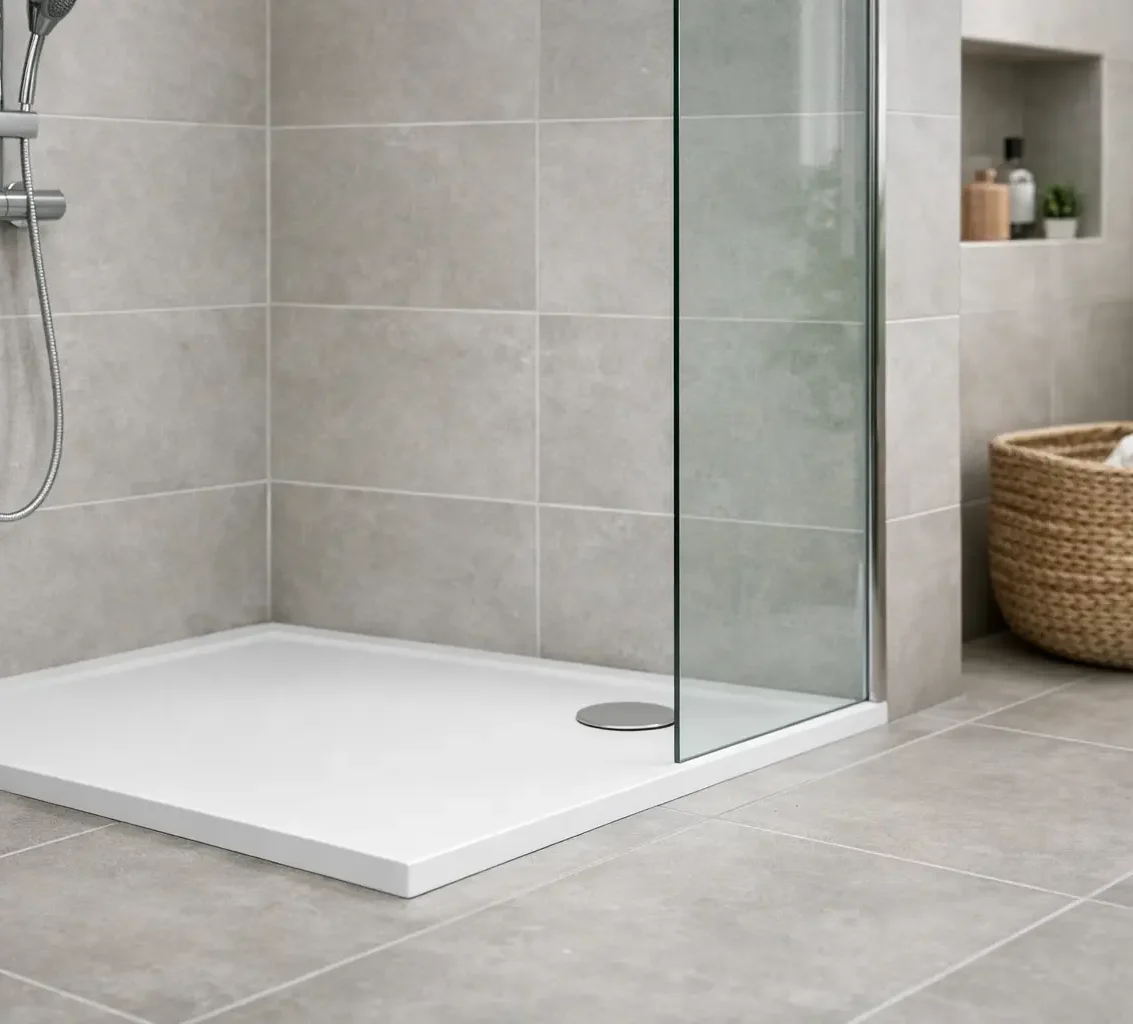
Low Level Access Shower Tray Guide
Stepping over a high shower lip can feel like a small thing until it becomes the part of the day you worry about most. A low level access shower tray is designed to remove that obstacle, making showering safer, easier and far more comfortable for people with reduced mobility, as well as for families planning ahead.
Unlike a standard tray with a more noticeable step up, this style sits much closer to the floor. That lower entry point can make a real difference if balance is less reliable, joints are stiff, or a wheelchair or walking aid needs to be accommodated. Just as importantly, it can look smart and contemporary, so the bathroom still feels like part of the home rather than a clinical adaptation.
What is a low level access shower tray?
A low level access shower tray is a shower base with a reduced threshold, allowing you to step in with less effort. It is not always fully flush with the floor in the way a wet room can be, but it offers a much easier entry than a conventional shower tray.
For many households, that makes it an ideal middle ground. You get improved accessibility and a defined showering area, without always needing the same level of floor alteration that some wet room installations require. It can suit people who want a safer shower now, and also those who are making sensible changes before a bathroom becomes difficult to use.
The tray itself is usually paired with practical safety features such as anti-slip surfaces, grab rails, easy-clean wall finishes and, where needed, a fold-down or fitted seat. The overall result is a shower space that supports independence while still looking neat and modern.
Why a low level access shower tray suits so many homes
The biggest benefit is confidence. If someone feels unsteady getting into the shower, even a modest step can become a daily hazard. Reducing that height can lower the risk of trips and help the user feel more secure from the moment they enter the enclosure.
That matters for older adults, people recovering after surgery, those living with arthritis or neurological conditions, and wheelchair users depending on the exact layout. It also matters for relatives who are trying to create a bathroom that is easier to manage without making the room feel institutional.
There is a style benefit too. A well-designed low access shower can feel light, spacious and current. Clear glass screens, smart wall panels and carefully chosen fittings can create a room that feels elegant rather than adapted in an obvious way. For many customers, that balance between safety and appearance is exactly what they are looking for. At Safe Bathing Solutions, this combination of accessibility and attractive design is one of the common properties discussed during home consultations.
Low level access shower tray or wet room?
This is one of the most common questions, and the answer depends on the user, the room and the budget.
A wet room offers level access across the floor and can be the best option where full wheelchair access is needed or where maximum openness is the priority. It can also be excellent in smaller bathrooms because it removes visual barriers and makes the space feel larger.
A low level access shower tray, however, is often a very practical choice when you want easier access without committing to a full wet room conversion. It creates a clear showering zone, helps contain water more effectively, and can sometimes be installed with less disruption. For many households, that makes it a strong option because it improves daily safety while keeping the project straightforward.
Neither option is automatically better. It depends on how the bathroom is used now, how it may need to work in the future, and whether the user needs assisted bathing, seating, wheelchair turning space or room for carers.
Who should consider a low level access shower tray?
This type of shower is particularly useful for people who can still step into a shower, but find a standard tray too high or awkward. That includes those with reduced strength, limited flexibility, poor balance or persistent pain.
It can also be a very sensible choice for couples planning a bathroom that will continue to work well over time. Making a proactive change often feels less stressful than waiting for a fall, injury or sudden change in health to force an urgent decision.
Family members arranging a safer bathroom for a parent often choose this option because it feels familiar. The shower remains easy to understand and comfortable to use, but with a much lower barrier to entry and better safety features built around it.
What to look for in a low level access shower tray
The tray height matters, but it is only one part of the picture. A safer shower depends on the whole design working together.
Slip resistance is important, especially if the user is unsteady on wet surfaces. The size of the tray is just as important as its height. A cramped shower can be difficult to use even if the entry is low, while a more generous tray can allow easier turning, support from a carer or better use of a shower seat.
Drainage should never be treated as an afterthought. Good drainage helps prevent standing water and supports safer footing. Screen choice matters too. In some bathrooms, a full enclosure gives warmth and splash control. In others, a simple glass panel or wider opening creates better access.
It is also worth thinking about future needs. A shower that works well today may need to accommodate a seat, rails or mobility aids later. Planning for that at the start often leads to a better long-term result.
Design details that make a real difference
Small details often shape the day-to-day experience more than people expect. Easy-to-reach controls, a thermostatic shower to help avoid sudden temperature changes, and wall-mounted support rails placed in the right positions can all improve confidence.
A built-in or fold-down seat can turn showering from a tiring task into a much more relaxed routine. Wider access can make movement simpler, and carefully chosen finishes can keep the room bright and welcoming. The best accessible bathrooms do not just remove hazards. They feel comfortable to spend time in.
Installation matters as much as the product
Even an excellent tray will only perform properly if it is installed correctly. The floor structure, waste position, pipework and surrounding wall finishes all affect how well the shower works and how easy it is to use.
This is where specialist advice becomes valuable. A bathroom adaptation should be based on the person using it, not just on what happens to fit the space. That means looking at how someone gets in and out of the shower, whether they need support, how much room they have to move, and what would help them feel safe without compromising the look of the room.
At Safe Bathing Solutions, every accessible bathroom is planned around the individual’s current needs while also considering how those requirements may change in the future. This helps ensure the finished shower remains practical, comfortable and safe for years to come.
In some homes, particularly older properties in the North West, the existing bathroom layout may present challenges around drainage levels or available space. Those challenges can usually be addressed, but they should be considered early so the finished shower performs well and looks right.
Common concerns people have
Some people worry that a low level access shower tray will still not be accessible enough. Sometimes that is true, particularly if full wheelchair access is required. In that case, a wet room may be the better solution. The key is to be realistic about current and future needs.
Others assume an accessible shower will spoil the appearance of the bathroom. In practice, the opposite is often true when the design is handled properly. Modern accessible bathrooms can feel stylish, calm and carefully finished, with smart fixtures and clean lines.
Cost is another understandable concern. The final price depends on tray size, screens, wall coverings, drainage work and any additional adaptations. What matters most is choosing a solution that genuinely improves daily life and is installed to last. A cheaper option that still feels awkward to use is rarely good value.
Choosing the right solution for your home
The best shower is not simply the one with the lowest step. It is the one that matches the user, the bathroom and the level of support needed.
For some people, a low level access shower tray offers exactly the right balance of safety, style and practicality. It reduces risk, improves confidence and keeps the bathroom easy to maintain. For others, especially where mobility is more limited, a wet room or more tailored adaptation may be more appropriate.
A good starting point is to think honestly about the difficulties being experienced now. Is the problem stepping in? Standing for too long? Fear of slipping? Needing room for assistance? Once that is clear, the right layout becomes much easier to identify.
At Safe Bathing Solutions, we specialise in designing and installing accessible bathrooms across the North West, helping homeowners create safer, more comfortable bathing spaces without compromising an appearance. Our practical, person-first approach leads to bathrooms that support independence while still feeling like a home.
If your current shower has become something to manage rather than something to enjoy, a low level access shower tray could be the change that restores confidence every single day. Contact Safe Bathing Solutions for professional advice on the most suitable, Safe Bathing Solutions and accessible shower solution for your home.[
We need your consent to load the translations
We use a third-party service to translate the website content that may collect data about your activity. Please review the details in the privacy policy and accept the service to view the translations.