
Specialist in Accessible Walk-in Showers, Adapted Bathrooms, and Mobility Solutions.
Email: sales@safebathingsolutions.co.uk Tel: 0151 601 8981
Specialist in Accessible Walk-in Showers, Adapted Bathrooms, and Mobility Solutions.
Email: sales@safebathingsolutions.co.uk Tel: 0151 601 8981
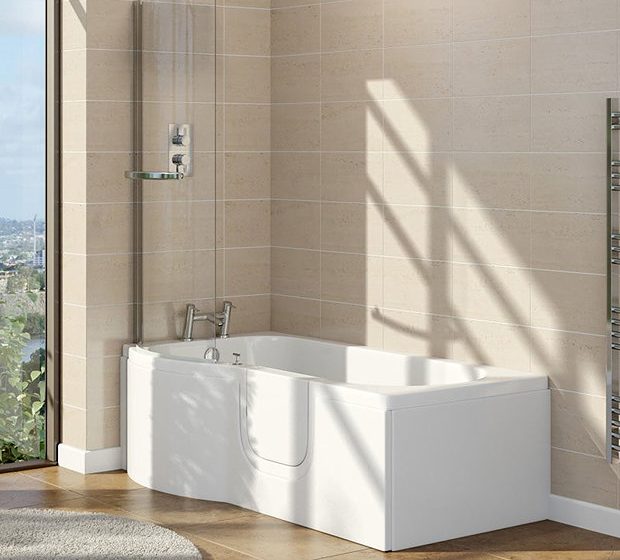
Stepping over a high bath side can go from mildly awkward to genuinely risky far more quickly than most people expect. If bathing has started to feel tiring, unsteady or something you need help with, it is natural to ask: what is a mobility accessible walk-in bath, and would it make everyday life easier?
A mobility accessible walk-in bath is a bath designed for people who find a standard bath difficult or unsafe to use. In most cases, that means a much lower threshold for entry, a door that allows walk-in access, and practical safety features such as slip-resistant flooring, built-in seating, grab rails and easy-to-reach controls. The aim is not simply to make bathing possible. It is to make it safer, more comfortable and more dignified.
For many households, this type of bath sits in the middle ground between a standard bath and a level-access shower. It allows someone to continue enjoying a soak while reducing the strain, height and instability that often come with climbing in and out of a conventional bath. At Safe Bathing Solutions, we regularly help homeowners find the right balance between bathing comfort, safety and long-term independence.
What is a mobility accessible walk-in bath designed to solve?
The problem is usually not bathing itself. It is the access. A traditional bath asks a lot of the user - balance on one leg, lift the knees high, lower down into a deep position, then stand back up again on a wet surface. For an older adult, someone with joint pain, reduced balance, muscle weakness or a long-term condition, those movements can be the hardest part of the day.
A mobility accessible walk-in bath is designed to remove as many of those barriers as possible. Instead of stepping over a tall bath panel, the user enters through a watertight side door. Instead of dropping down to the base of the bath, they often sit on a raised built-in seat. Instead of stretching or twisting, controls are positioned for easier reach.
That matters because confidence in the bathroom affects far more than hygiene. When a bath feels unsafe, people often start washing less often, relying on help they would rather not need, or avoiding bathing altogether. A better bathing setup can support independence in a very real way.
What makes a mobility accessible walk-in bath different?
The key difference from a standard bath is that accessibility is built into the design rather than added on afterwards.
Low-entry access
The most obvious feature is the low step-in height or walk-in door. This reduces the need to lift the legs high and lowers the risk of catching a foot on the bath side.
Built-in seating
Many walk-in baths include an integrated seat at a practical height. That means the user can sit down in a more natural position rather than lowering themselves all the way to the bottom of the bath.
Slip-resistant surfaces
The bath floor and surrounding surfaces are often designed to offer better grip underfoot. This is a small detail that can make a meaningful difference when surfaces are wet.
Grab rails and supportive fittings
Well-positioned grab rails, shaped door handles and user-friendly controls all help reduce strain on the wrists, shoulders and knees.
Easier bathing position
Some walk-in baths are designed for seated bathing, while others allow a deeper soak with additional support. The right choice depends on the user's mobility, comfort preferences and available bathroom space.
Who is a mobility accessible walk-in bath suitable for?
A mobility accessible walk-in bath can suit a wide range of people. It is often chosen by older homeowners who want to stay comfortable and independent at home for longer. It can also be a good option for people living with arthritis, Parkinson's, multiple sclerosis, reduced balance, chronic pain or limited lower-body strength.
It may also suit someone recovering from surgery or injury, especially if a standard bath has become difficult during rehabilitation. In other cases, it is a family decision, with an adult son or daughter helping a parent adapt the home before bathing becomes a serious concern.
That said, it is not automatically the best answer for everyone. For wheelchair users or people with very limited transfers, a level-access shower or wet room may be more practical. A bath with a door improves entry, but it still needs to match how the person moves, sits and stands in daily life.
Many customers who contact Safe Bathing Solutions are looking for a way to continue enjoying a relaxing bath without the risks associated with climbing in and out of a traditional bath.
What is a mobility accessible walk-in bath like to use day to day?
In practical terms, the user opens the side door, steps in over the low threshold, sits on the built-in seat and closes the door before filling the bath. After bathing, the water is drained before the door is opened again.
That last part is worth understanding. Because the door must stay shut while the bath is full, the user will need to wait a short time for filling and draining. For some people, that is a perfectly reasonable trade-off for a much safer entry and exit. For others, particularly if they feel the cold easily or become impatient, it is something to discuss before choosing a model.
Many modern baths are designed to make the experience more comfortable, with options such as quick-drain systems, warm-touch materials and hydrotherapy features. Those extras can be helpful, but the starting point should always be safe, comfortable access.
The main benefits of a mobility accessible walk-in bath
The clearest benefit is safety. A lower threshold, stable seat and supportive features can reduce the risk of slips and falls in one of the most hazardous rooms in the home.
Just as important is comfort. People often assume accessible products feel clinical, but that need not be the case. A well-designed mobility bath can feel calm, stylish and properly part of the home, rather than looking like a medical fitting.
There is also the question of dignity. Being able to bathe in privacy, without relying on someone else for physical assistance, can make a significant difference to confidence and wellbeing.
For households planning ahead, installing an accessible bath can also be a sensible long-term adaptation. It can make the home easier to live in now while reducing the likelihood of urgent changes later. This is one of the reasons walk-in baths remain one of the most popular accessibility solutions installed by Safe Bathing Solutions.
What to consider before choosing one
The best accessible bathroom solution always depends on the individual. A mobility accessible walk-in bath may sound ideal on paper, but the right choice comes down to how the user bathes, how much support they need and how the room is laid out.
Space is one factor. Some bathrooms can accommodate a walk-in bath without major changes, while others may benefit more from a low-level shower tray or full wet room layout.
Mobility level matters too. If someone can sit and stand with a little support, a walk-in bath may work very well. If transfers are more difficult, a shower with level access may be safer and simpler.
Think about preferences as well. Some people strongly value having a proper soak and do not want to give up bathing. Others would rather have the speed and ease of a shower. Neither is right or wrong.
Heating and drainage are practical considerations too. A quality installer will assess plumbing, floor space, door clearance and the overall layout so the finished bathroom feels natural to use, not squeezed in as an afterthought.
What is a mobility accessible bath compared with a standard walk-in bath?
This is where terminology can get confusing. In everyday use, a mobility accessible walk-in bath is often a walk-in bath. Both refer to baths designed to make entry and bathing easier for people with reduced mobility.
Sometimes, though, mobility accessible walk-in bath is used more broadly to describe any bath with accessibility-focused features, including baths with doors, lift-assisted baths or designs with easier seating and support. If you are comparing products, it helps to look beyond the label and focus on the actual features.
Ask simple questions. How high is the step-in? Is there a seat? Are the surfaces slip-resistant? How easy are the controls to reach? How quickly does it drain? The answers will tell you more than the product name alone.
Why professional advice matters
Bathroom adaptation is never one-size-fits-all. Two people with the same diagnosis can need very different solutions depending on their strength, balance, height, confidence and routine.
That is why an in-home assessment is so valuable. A specialist can look at the bathroom as it is, understand the user's needs and recommend whether a mobility accessible tub, walk-in bath, shower adaptation or full redesign would work best. At Safe Bathing Solutions, every recommendation is based on how the individual uses their bathroom today and how their needs may change in the future.
In homes across Liverpool and the wider North West, that tailored approach often prevents costly decisions that look good in a brochure but do not feel right in everyday use.
A good installer will also consider appearance, not just access. The best adapted bathrooms support safety without making the room feel institutional. That balance matters more than many people realise.
For homeowners across Liverpool, Merseyside and the North West, Safe Bathing Solutions provides specialist advice and installation services for walk-in baths, mobility baths, wet rooms and accessible showering solutions designed around each individual’s needs.
Choosing a mobility bathing solution is not only about reducing risk. It is about creating a bathroom that feels comfortable, usable and fully part of your home for years to come.
We need your consent to load the translations
We use a third-party service to translate the website content that may collect data about your activity. Please review the details in the privacy policy and accept the service to view the translations.