
Specialist in Accessible Walk-in Showers, Adapted Bathrooms, and Mobility Solutions.
Email: sales@safebathingsolutions.co.uk Tel: 0151 601 8981
Specialist in Accessible Walk-in Showers, Adapted Bathrooms, and Mobility Solutions.
Email: sales@safebathingsolutions.co.uk Tel: 0151 601 8981
Wet Rooms for Safer, Stylish Living | Safe Bathing Solutions
Stepping over a bath side or a raised shower tray can turn an ordinary routine into a daily worry. That is why wet rooms are such a popular choice for people who want a bathroom that feels safer, easier to use and more comfortable to live with. Done well, they do more than improve access. They create a calm, modern space that supports independence without making the room feel clinical.
For many households, the appeal is simple. A wet room removes awkward barriers and gives you a level, open showering area that is easier to enter, easier to clean and easier to adapt around changing needs. For older adults, wheelchair users, people recovering from surgery, or families planning ahead, that combination can make a real difference. At Safe Bathing Solutions, we regularly help homeowners achieve this balance between accessibility, safety and modern bathroom design.
What are wet rooms?
A wet room is a fully waterproofed bathroom or showering area with level access into the shower space. Instead of stepping into a standard shower enclosure or over a shower tray, the floor is gently laid to direct water towards a drain. The result is a cleaner, more open layout with fewer obstacles underfoot.
That open-plan design is one of the main reasons wet rooms work so well in accessible bathrooms. The room can be arranged around the user rather than forcing the user to work around the room. If someone needs extra space for support, a carer, a walking aid or wheelchair access, the layout is far more flexible than many traditional bathrooms.
A good wet room is not simply a bathroom with tiles and a drain. It needs proper tanking, careful floor preparation and thoughtful design so that it performs well every day. That is why specialist installation matters.
Why wet rooms work so well for accessibility
The biggest benefit is level access. Removing the lip of a tray or the side of a bath reduces a common trip hazard and makes entry much simpler for anyone with reduced mobility. If balance is unsteady, joints are stiff or confidence has dropped after a fall, those few inches can feel much bigger than they sound.
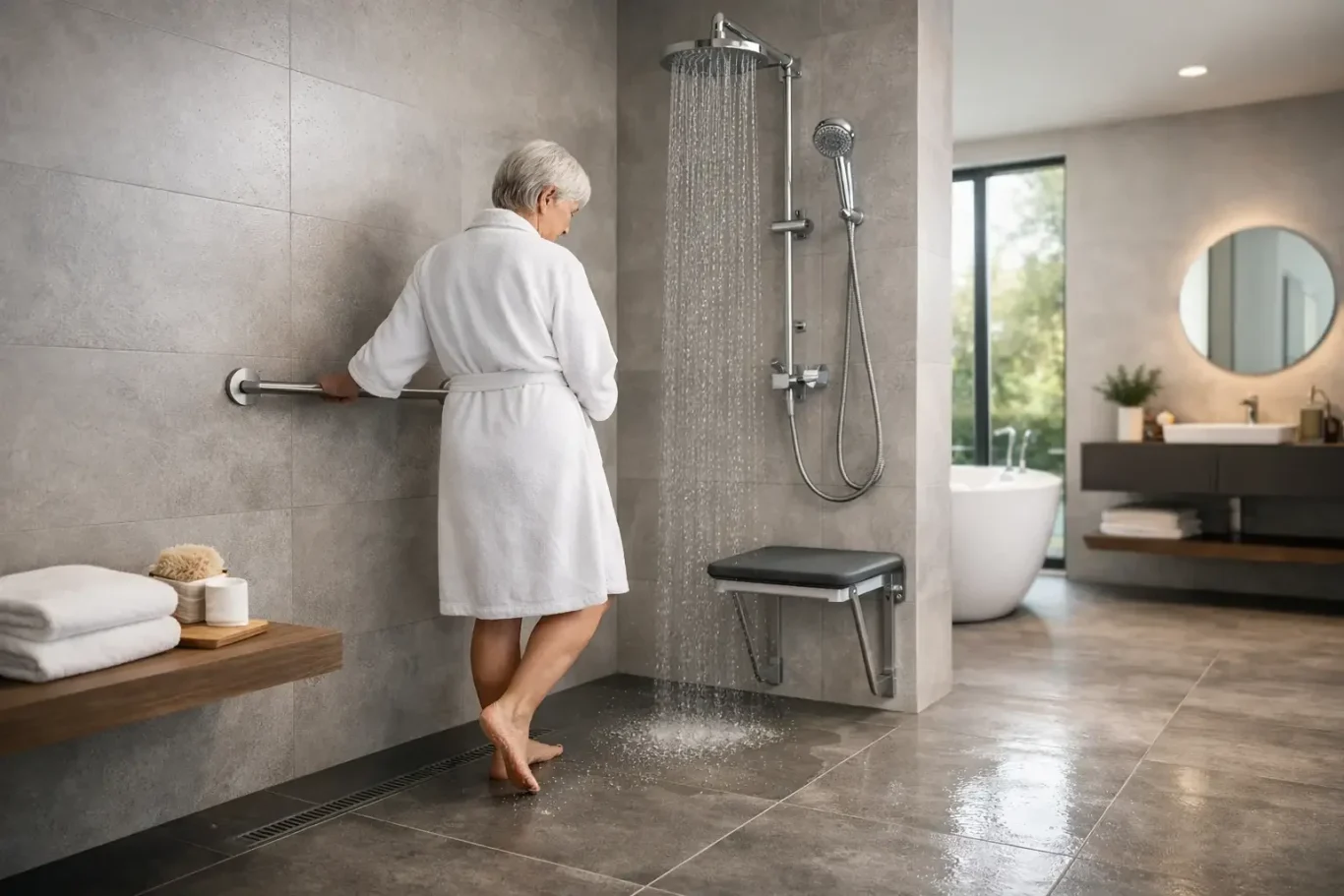
Wet rooms also allow safety features to be built in without making the space feel institutional. Grab rails can be positioned exactly where they are needed. A fold-down or fixed shower seat can provide comfort and stability. Slip-resistant flooring offers better underfoot confidence, especially when the bathroom is being used first thing in the morning or late at night.
There is also the question of dignity. Many people want practical support, but they do not want their home to feel like a care setting. Wet rooms can be designed with clean lines, contemporary finishes and a spacious feel that keeps the room looking stylish as well as functional. This approach is at the heart of every of every wet room installation undertaken by Safe Bathing Solutions.
Are wet rooms right for every home?
Not always, and that is where honest advice is important. Wet rooms can be an excellent solution, but the right option depends on the user, the property and the bathroom itself.
If wheelchair access is needed, or if stepping over a tray is becoming difficult, a wet room often makes strong sense. The same applies if you want the easiest possible access now while also planning for future mobility changes. In smaller bathrooms, a wet room can sometimes make the space feel larger because there is less visual interruption from trays, doors and bulky fittings.
On the other hand, some households still prefer a low level access shower tray or a walk-in shower enclosure. That might be because they want more splash control, a more defined showering area, or a layout that suits the room better. A wet room is not automatically the best answer in every case. The best answer is the one that fits how the bathroom will be used, both now and in the years ahead.
Key design features in accessible wet rooms
The most successful wet rooms are designed around everyday use. Flooring is a major part of that. Anti-slip surfaces help reduce risk, but they should also be comfortable to walk on and easy to maintain. The floor needs the correct gradient to move water efficiently without creating awkward footing.
Drainage is equally important. A well-designed drainage system keeps water under control and helps the room dry properly after use. In practical terms, that means a safer, cleaner space with less chance of water travelling where it should not.
Showering fixtures need just as much thought. Controls should be easy to reach and simple to understand. A handheld shower can be useful for seated users, while a fixed overhead option may still be included for comfort and preference. If more than one person uses the bathroom, the design should accommodate everyone without compromise where possible.
Support features should feel integrated rather than added as an afterthought. Rails, seating, half screens and storage can all be chosen in finishes that match the wider bathroom design. A well-planned accessible bathroom should feel intentional and polished.
Space for wheelchair and carer access
For some households, extra manoeuvring room is not a luxury but a necessity. Wet rooms can be particularly effective here because the open floor area allows easier turning and positioning. If a wheelchair user needs direct shower access, or if a family member provides support during bathing, a more open layout can ease strain and improve safety for everyone involved.
That said, space planning must be realistic. A compact bathroom can still become a wet room, but it may need careful choices around basin size, toilet position and shower screen design. This is where a bespoke survey becomes valuable.
Style matters too
Safety should never mean settling for a bathroom that feels cold or purely functional. Many people come to accessible adaptations after a fall, an illness, or a growing concern about managing alone. At that point, they need reassurance, not a room that constantly reminds them of what has changed.
Wet rooms can feel bright, elegant and easy to enjoy. Large-format tiles, coordinated fittings, modern wall panels and well-planned lighting can all help create a bathroom that enhances the home. For many customers, that balance is what makes the decision easier. They are not just solving a problem. They are improving the room.
That is especially important if you are adapting a bathroom for a parent or partner. The right design preserves comfort and self-respect. It supports independence while still feeling like a home improvement to be proud of. Safe Bathing Solutions specialises in creating accessible bathrooms that blend practical mobility features with attractive, contemporary stying.
Installation is where quality really counts
A wet room has to be built properly from the ground up. Waterproofing, drainage and floor preparation are not details that can be guessed at or rushed. If any part is wrong, the problems tend to show up later and they can be expensive to put right.
A specialist installer will assess the structure of the floor, the size of the room, existing pipework and how the space is used day to day. They will also consider details that matter to the person living there, such as whether they tire easily, whether they need seated showering, or whether there is a risk of slipping when transferring from a wheelchair.
This is why a consultation-led approach is so important. Good wet rooms are not lifted from a brochure and dropped into place. They are planned around the user. At Safe Bathing Solutions, every project begins with a detailed assessment to ensure the finished wet room is both practical and tailored to the individual’s needs.
Questions worth asking before you choose a wet room
Before going ahead, it helps to think about how the bathroom is used now and what may change in future. Is the main goal to avoid stepping over a bath? Is wheelchair access needed? Would a shower seat improve comfort? Does someone else need enough room to assist safely?
It is also worth considering cleaning and maintenance. Wet rooms are often easier to keep clean because there are fewer edges, trays and enclosures, but the materials still need to be chosen carefully. Good slip-resistant flooring and quality wall finishes can make day-to-day upkeep much simpler.
Finally, think beyond the immediate need. A bathroom adaptation should support you not just today, but for years to come. Choosing a layout that allows for future changes can save disruption later.
At Safe Bathing Solutions, that is the thinking behind every well-designed accessible bathroom. The best wet rooms do not just make washing safer. They help people move with more confidence, feel more comfortable at home and hold on to the independence that matters so much every single day.
If your current bathroom is becoming harder to use, the right change can feel much bigger than a new suite or a fresh finish. It can give everyday life a little more ease, and that is often where real comfort begins. Contact Safe Bathing Solutions to discuss how a professionally designed wet room could help make your home safer, more accessible and easier to enjoy for many years to come.
We need your consent to load the translations
We use a third-party service to translate the website content that may collect data about your activity. Please review the details in the privacy policy and accept the service to view the translations.